Hybrid Spatial Computing: Redefining Workspace
By 2026, the boundary between physical and digital work environments has effectively dissolved. Spatial computing is moving beyond specialized headsets into integrated, multi-modal systems that naturally enhance how teams collaborate across the globe.
The Shift from 2D to Spatial
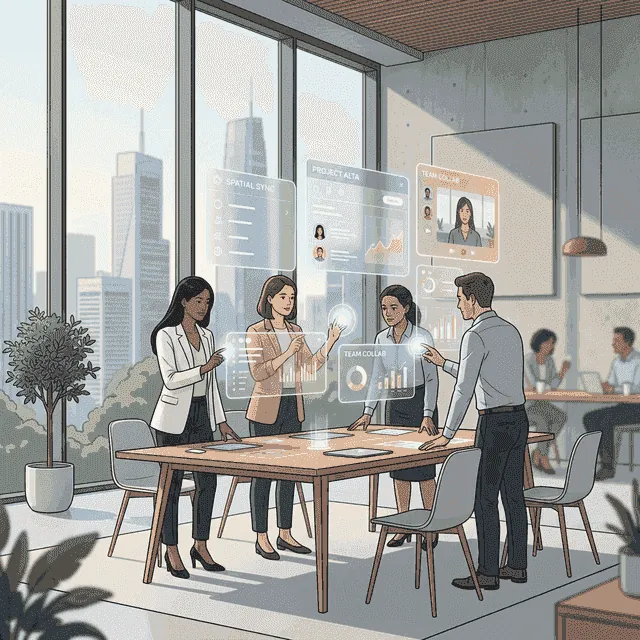
For decades, digital work was confined to flat glass panes, such as monitors and mobile screens. Spatial computing introduces the concept of “infinite canvas,” where data, applications, and collaborators exist in the physical space around the user. This shift improves cognitive load, fosters deeper focus, and makes remote collaboration feel as immediate as sitting in the same room.
Enabling Technologies
The maturity of high-fidelity passthrough, low-latency spatial audio, and hand-tracking has reached a point where digital objects feel stable and solid within their physical context. This is the foundation of the modern Hybrid Spatial Workspace.
Core Benefits for Global Teams
- Shared Spatial Context: Teams can view and manipulate 3D models or complex data visualizations together in real-time, regardless of geography.
- Contextual Intelligence: AI agents that understand the physical environment can provide proactive assistance based on what the user is currently doing or looking at.
- Reduced Cognitive Friction: Applications can be pinned to specific physical locations, creating persistent, intuitive workspaces that match mental models.
Preparing the Enterprise
How to Integrate Spatial Tech:
- Invest in high-performance network backbones capable of sustaining sub-20ms latency for spatial sync.
- Re-evaluate UI/UX standards to prioritize gaze-and-gesture interactions over traditional pointer inputs.
- Develop “Spatial First” security protocols for visual privacy in shared environments.
Related Insights & Solutions
Continue exploring how we engineer resilient, high-performance technology.