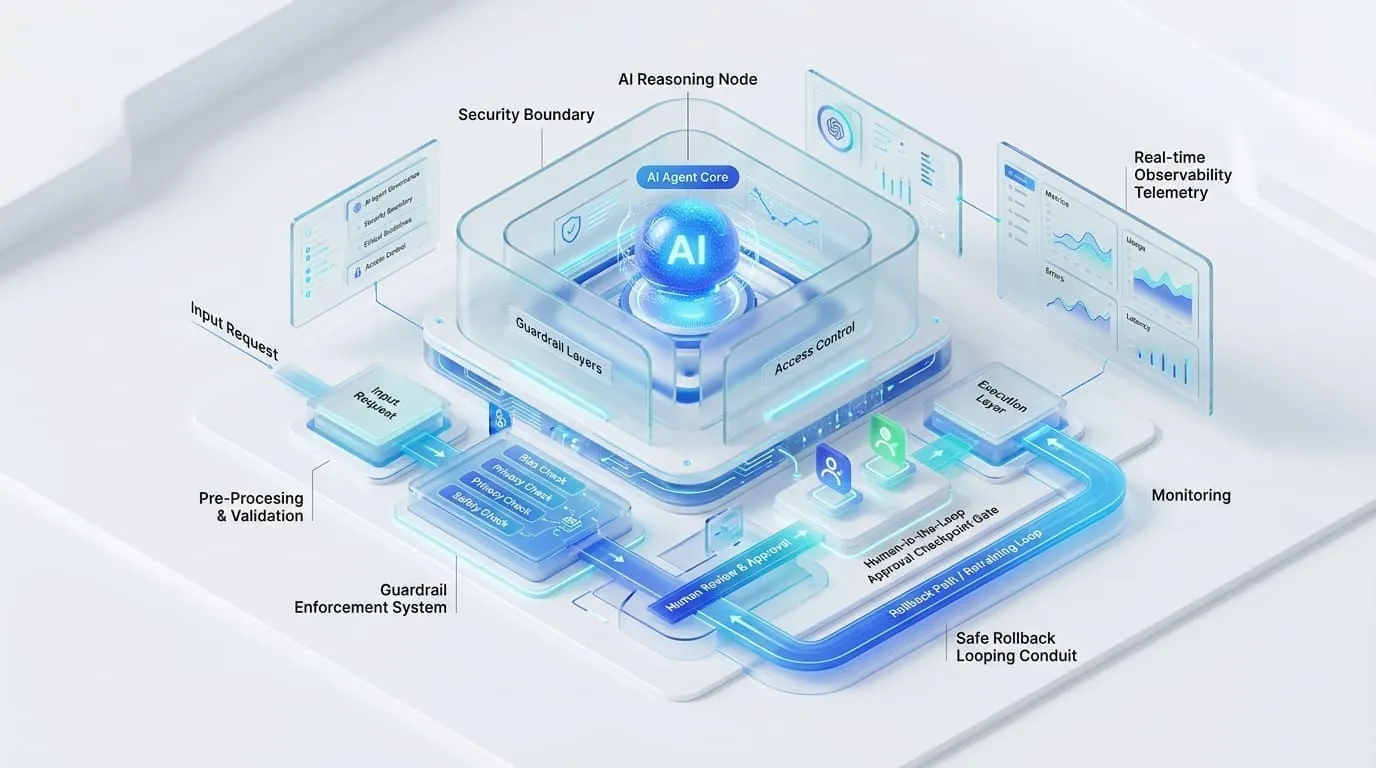
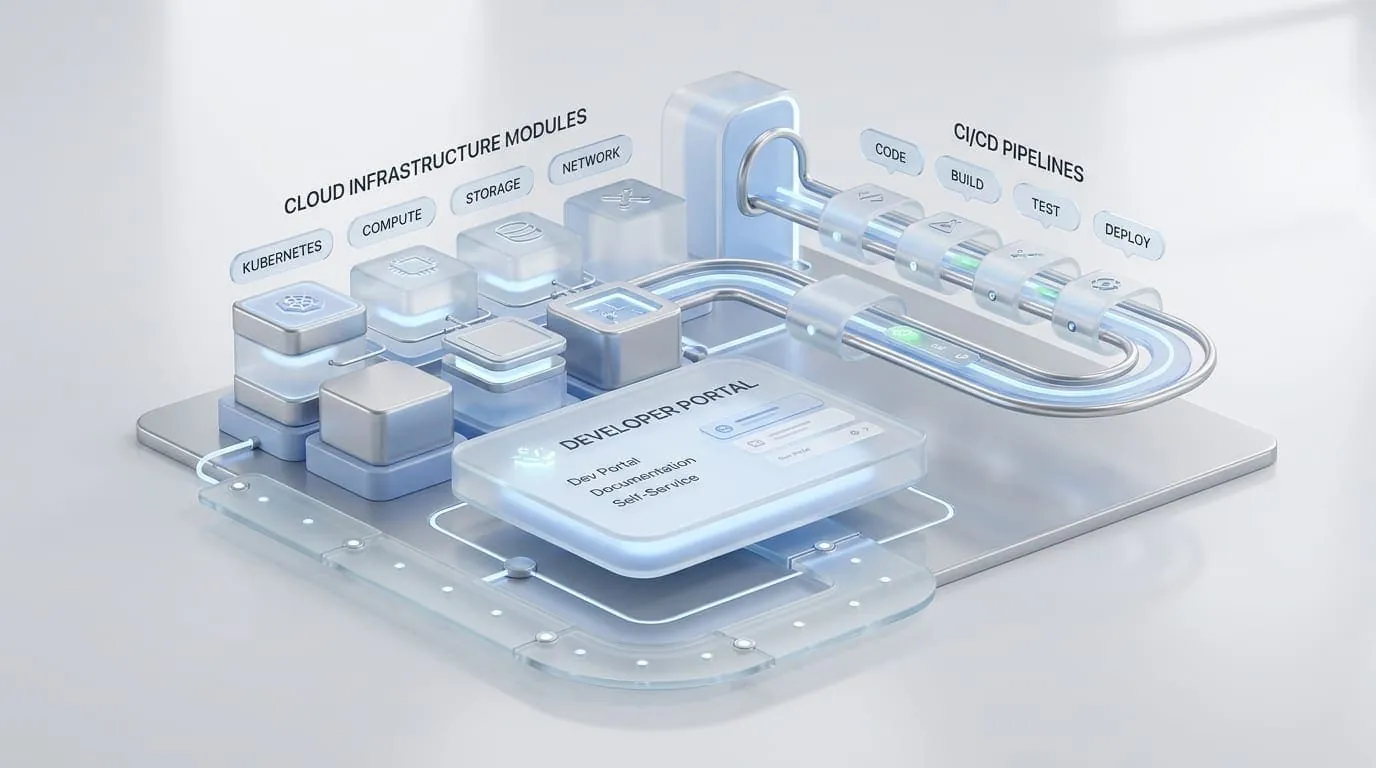
Governing AI-Generated Internal Apps: Why the Bottleneck Moved from Writing Code to Governing Outcomes
AI can now build internal applications faster than many companies can decide who owns them. As natural-language app generation and persistent agents mature, the engineering bottleneck has permanently shifted from writing code to governing outcomes.

The Velocity Shift: From Writing Code to Governing Outcomes
On September 25, Microsoft announced significant new Copilot capabilities capable of creating full internal applications, interactive trackers, cross-system dashboards, automations, and multi-step workflows directly from natural-language instructions. Alongside these generation tools, they introduced a managed runtime with persistent agents designed to work autonomously across heterogeneous enterprise software systems.
This announcement marks an undeniable inflection point for technical leaders. However, the critical takeaway is not that software engineering has vanished. Rather, the fundamental constraint of enterprise technology has shifted:
“The bottleneck has permanently moved from the mechanics of writing code to the institutional discipline of governing outcomes.”
EasyLauncher Enterprise AI PracticeWhen spinning up a custom CRUD interface, data ingestion webhook, or notification pipeline requires only a three-sentence prompt, the cost of code synthesis drops to near zero. What skyrockets in cost is the downstream complexity: data governance, API privilege boundaries, audit trails, and long-term application lifecycle ownership.
The 4 Non-Negotiable Governance Questions
Before an AI-generated application or persistent agent connects to production data or serves real team members, engineering and security leaders must be able to answer four foundational questions.
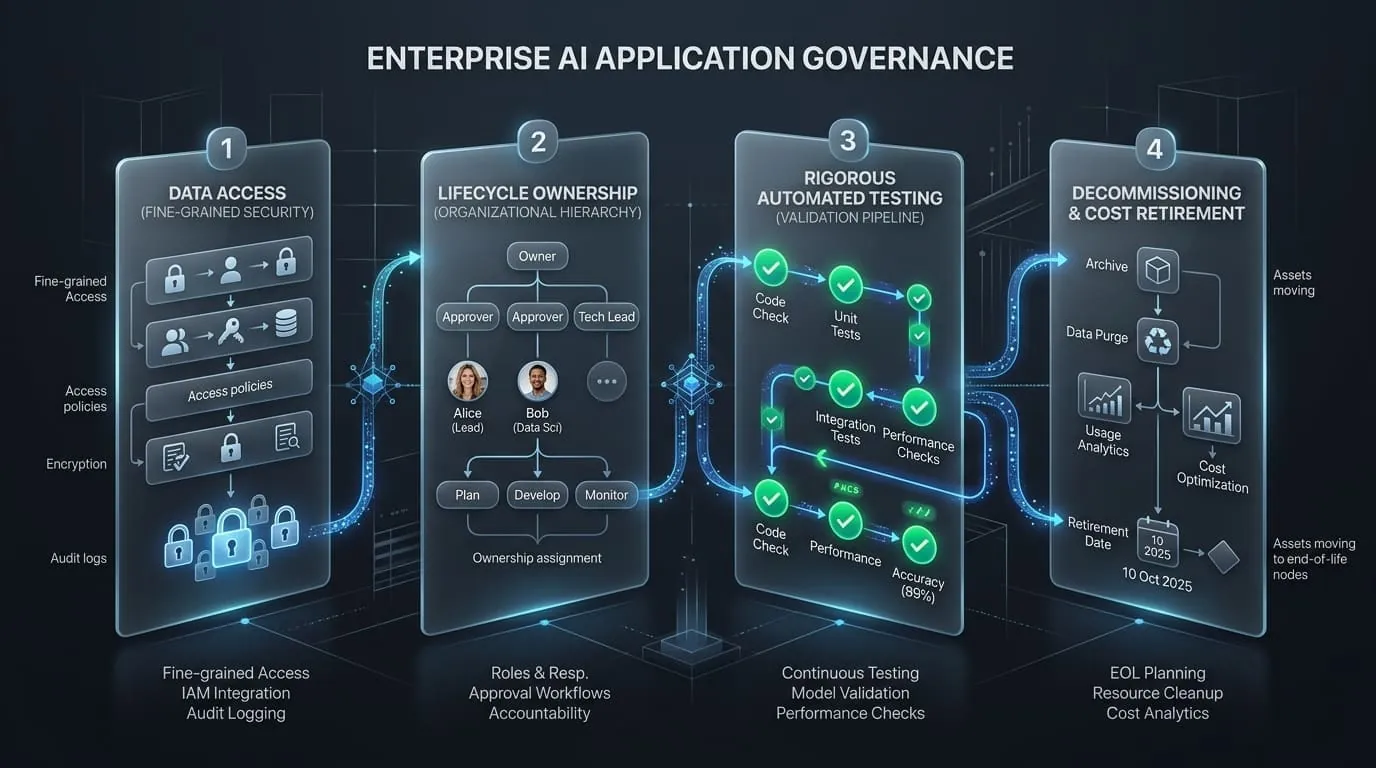
Figure 1: The Four Pillars of Governed Internal AI Applications and Persistent Agents.
1. Data Access: What Information Can It Read or Modify?
When an employee generates an application to summarize customer records or reconcile invoices, how is data access restricted? Does the app inherit the prompt author's blanket administrative access, or does it execute inside a strictly isolated identity scope?
- Scope Minimization: Internal applications must strictly adhere to the principle of least privilege (PoLP). An app built to view inventory status must never possess write or delete permissions on warehouse tables.
- Row-Level Security (RLS): User context must be preserved at every database interaction. If an AI agent queries Postgres or BigQuery on behalf of a sales representative, it must strictly filter rows matching that user's assigned territory.
- Prompt Injection & Exfiltration Defenses: Persistent agents reading inbound emails or unstructured attachments can be hijacked via indirect prompt injection. Hardened input sanitization and outbound data egress inspection are essential.
2. Ownership: Who Remains Accountable When the Creator Moves On?
The most vulnerable systems inside medium and large enterprises are undocumented scripts created by a single energetic employee who transferred departments six months ago.
With AI generating working applications in minutes, this problem multiplies by an order of magnitude. If a customer-facing support dashboard breaks on a Saturday morning, who gets paged? If compliance audits a data export triggered by an agent, who answers for its integrity?
The Custody Rule
No AI-generated application may be connected to shared production data without a named functional team owner, a designated technical sponsor, and an explicit maintenance escalation runbook documented in the organization's service catalog.
3. Testing: How Are Errors, Permissions, and Edge Cases Validated?
AI-generated code frequently appears correct on the surface while harboring subtle logical flaws, unhandled null states, and race conditions. A human prompt author inspecting a single sample execution will miss edge cases that production traffic exposes immediately:
- Deterministic Validation: For business-critical operations like financial ledger updates or access provisioning, the execution layer must be validated by deterministic unit and regression tests, not probabilistic model guesses.
- Sandboxed Staging Environments: Applications must be automatically deployed to isolated test environments pre-populated with synthetic data to test payload thresholds and edge behaviors before live deployment.
- Permission Boundary Testing: Automated security tests must attempt unauthorized reads and writes to verify that role-based access controls (RBAC) cannot be bypassed by clever prompting or crafted parameter inputs.
4. Retirement: Who Removes Unused Apps, Integrations, and Recurring Costs?
Creation friction has reached zero, but deletion friction remains high. Without proactive lifecycle policies, enterprises accumulate zombie applications, lingering webhooks, orphaned database credentials, and persistent agents continuously burning API tokens in the background.
Every AI application must be stamped with a strict operational time-to-live (TTL). If an internal tool receives zero interactions over a rolling 45-day window, automated platform monitors should notify the owner, initiate safe hibernation, and subsequently revoke all connected API tokens and storage volumes.
From Spreadsheet Sprawl to AI Application Sprawl
For decades, IT organizations battled spreadsheet sprawl: critical business operations running on disconnected, unversioned Excel sheets stored on local laptops. Spreadsheets were accessible, flexible, and required no engineering ticket. But they were also unmonitored, fragile, and ripe for catastrophic error.
Unchecked AI generation threatens to introduce “Spreadsheet Sprawl 2.0”, but with far higher operational stakes. Unlike a passive spreadsheet, an AI-generated Copilot app or persistent agent possesses active execution capabilities: it can trigger REST calls, issue database updates, email clients, modify CRM pipelines, and spin up cloud infrastructure.
Organizations that establish structured governance will use these generative tools to obliterate longstanding internal backlogs. Organizations that fail to establish governance will find themselves buried under hundreds of unmaintained, unmonitored mini-apps that security teams cannot map and compliance officers cannot audit.
Unchecked Sprawl vs. Governed AI Operations
The difference between chaos and enterprise leverage lies in the platform engineering guardrails that support citizen developers and engineering teams alike:
| Governance Dimension | Unchecked AI Sprawl | Governed AI Systems |
|---|---|---|
| Identity & Credentials | Shared personal API keys or blanket user permissions | Granular, scoped service identities with token rotation |
| Code & Schema Control | Stored locally inside proprietary chat interfaces | Declarative GitOps repository with semantic versioning |
| High-Impact Actions | Autonomous agent writes directly to primary databases | Mandatory Human-in-the-Loop (HITL) approval gates |
| Cost & Telemetry | Undetected recurring token burn on dormant loops | Centralized FinOps dashboards with per-app spend ceilings |
| Application Sunsetting | Zombie apps left running indefinitely | Automated 45-day inactivity TTL with token revocation |
The 5-Step Governed Rollout Blueprint
Engineering leaders do not need to ban employee-driven AI generation to protect their enterprise. Instead, they must construct a sensible, lightweight golden path that channels velocity into reliability:
Select One Repetitive, Low-Risk Workflow
Resist the urge to deploy enterprise-wide generative apps immediately. Identify a single high-frequency operational pain point, such as internal ticket triaging, vendor invoice schema formatting, or project milestone updates.
Assign a Named Institutional Owner
Define a specific department lead and secondary technical custodian responsible for approving updates, monitoring error alerts, and responding to security inquiries.
Provision Restricted IAM Sandboxes
Never grant raw API tokens with tenant-wide permissions. Provide scoped API credentials restricted to read-only views or isolated staging tables with strict rate limits.
Enforce Human Approval on Irreversible Actions
If an application can initiate monetary payouts, delete database records, or transmit outbound emails to external clients, mandate an explicit two-click human confirmation gate with full audit logging.
Establish Automatic Inactivity Decommissioning
Connect all generated apps to an internal observability registry. Tools that go unqueried for over 45 days should be automatically flagged, disabled, and decommissioned to protect infrastructure from bit rot and unmonitored security exposure.
The Real Advantage: Turning Workflows into Governed Systems
The arrival of tools like Microsoft Copilot's application generator and persistent runtime does not diminish the value of engineering. It clarifies it. Writing syntax was always the easiest part of software development; understanding edge cases, data structures, regulatory boundaries, and failure modes has always been the real work.
The upcoming competitive advantage will not belong to the company that generates the most ad-hoc applications. It will belong to the organization that systematically transforms its highest-leverage workflows into governed, secure, and resilient enterprise systems.
Governing Your Enterprise AI Infrastructure
At EasyLauncher, our Enterprise AI and Platform Engineering practices help leadership teams design automated governance frameworks, IAM sandboxes, and production guardrails that unlock citizen development without compromising enterprise security.
Related Insights & Solutions
Continue exploring how we engineer resilient, high-performance technology.